

Dust can seem almost impossible to keep up with. You clean a room, wipe the furniture and vacuum the floors, only to notice a new layer of dust a few days later.
That can be frustrating, but it does not necessarily mean you are cleaning incorrectly. Household dust is constantly being introduced, moved and redistributed, so the more useful question is not simply how to remove it, but why it keeps returning and what kind of cleaning routine can keep it under control.
For busy Monmouth County households, understanding that difference can make home maintenance much more manageable.
Why does dust come back so quickly?
Dust is not one single substance. It is a combination of small particles that can come from people, fabrics, outdoor material, everyday household activity and other sources inside the home.
Some particles settle quickly on furniture and floors, while others remain suspended in the air before eventually landing on surfaces. Movement through the home can also redistribute particles that have already settled.
That is why wiping a surface once does not permanently solve the problem. Dust control is an ongoing maintenance task, not a one-time cleaning event.
Everyday activity constantly introduces new particles
Every home has its own sources of dust.
People move between rooms, clothing and bedding shed tiny fibers, upholstery releases particles, and household activity disturbs material that has already settled. Opening exterior doors and moving between indoor and outdoor spaces can also introduce additional particles.
In a busy household, these small contributions accumulate quickly.
The result is not necessarily a dirty home. It is simply a home that is being used every day.
Dust does not settle evenly throughout the home
Some surfaces reveal dust much faster than others.
Dark furniture, shelves, electronics and smooth horizontal surfaces can make even a small amount of accumulation noticeable. Floors and rugs can also collect particles that become airborne again when people walk through the room.
This means that two areas cleaned at the same time may not look equally clean a few days later.
The amount of visible dust depends partly on how the space is used, what surfaces are present and how often those areas are disturbed.
Some parts of a home naturally need more frequent attention

A useful cleaning routine should reflect where dust actually accumulates instead of treating every room exactly the same.
High-use areas generally deserve more regular attention because people move through them more often and daily activity continually disturbs settled particles.
Focus first on high-traffic areas
Entryways, living spaces, bedrooms and other frequently used areas can become dust collection points simply because they are part of everyday life.
Furniture, baseboards, shelving and floors may all require different approaches depending on the surfaces and how much activity the room receives.
Rather than trying to clean the entire house with the same intensity every time, prioritizing high-traffic areas can make routine maintenance more effective.
Soft surfaces can add to the workload
Carpets, rugs, curtains, bedding and upholstered furniture can hold particles and fibers that are less visible than the dust sitting on a tabletop.
Regular vacuuming and surface maintenance can help, but these materials also illustrate why dust control is not limited to wiping hard surfaces.
The more fabric and soft furnishings a household has, the more important it becomes to include them in an overall maintenance routine rather than focusing only on what is immediately visible.
Pets can make recurring dust management more demanding
Homes with pets may have additional sources of household particles, including hair, dander and material brought into the home through normal activity.
That does not mean every home with pets needs the same cleaning schedule. It does mean that pet households may need to pay closer attention to floors, furniture and frequently used areas when building a realistic maintenance routine.
This is one reason recurring cleaning can be useful for households where the home seems to become noticeably dusty again soon after cleaning.
What can make dust buildup worse?
Some homes seem to accumulate visible dust faster than others. The difference is not always the amount of cleaning being done. Household habits, surfaces, airflow and the way rooms are used can all influence how quickly particles become noticeable again.
Understanding those factors can help you decide where routine maintenance deserves more attention.
Air movement can redistribute settled dust
Dust does not necessarily stay where it first lands.
Heating and cooling systems, fans, open doors and normal movement through the house can disturb particles and move them between surfaces. A room that appears clean in the morning may show new dust later simply because particles have been redistributed.
This is one reason why repeatedly wiping the same visible surfaces may not solve the broader buildup.
Clutter can make routine dusting harder
Books, decorative objects, baskets, electronics and other items create additional surfaces where particles can settle.
Clutter does not create dust by itself, but it can make cleaning slower because more objects need to be moved or cleaned around. A simpler environment can make regular maintenance easier and more consistent.
That is particularly relevant for busy households trying to keep cleaning manageable during the school year.
Outdoor activity can contribute to indoor buildup
Everyday movement between the home, vehicles, yards and other outdoor spaces can bring particles indoors.
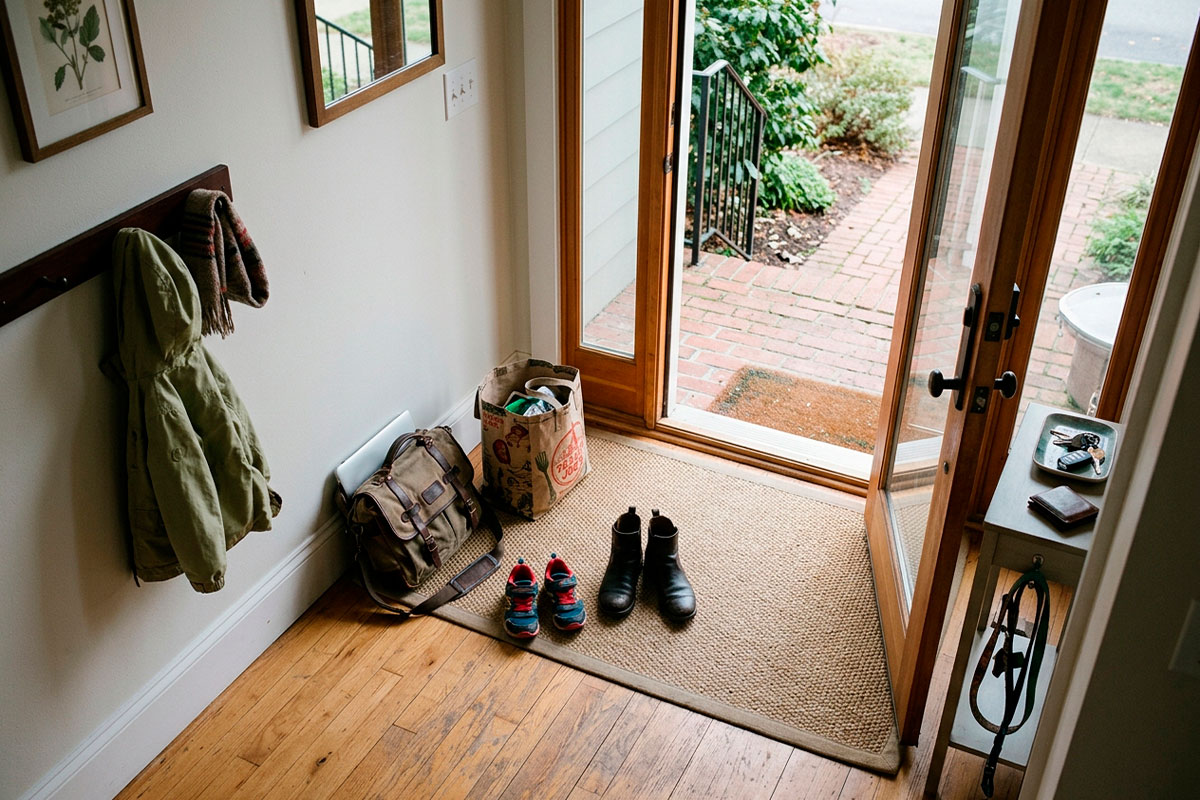
In homes with children, pets or frequent coming and going, entryways can become particularly important areas to maintain. Shoes, bags, outdoor equipment and other belongings can all increase the amount of material moving through these spaces.
A good routine therefore considers how the household enters, uses and moves through the home, not just which surfaces look dusty.
Why regular dusting may not be enough
Visible dust is only one part of household buildup. A quick wipe can improve the appearance of a surface, but it may not address particles collecting on less noticeable areas throughout the home.
Over time, those overlooked areas can contribute to a home feeling dusty again soon after routine cleaning.
Look beyond the most obvious surfaces
Shelves and countertops are easy to notice because they are directly in your line of sight. Baseboards, furniture edges, corners, light fixtures and other less visible areas can receive much less attention.
That does not mean every one of these areas needs intensive cleaning every week. It means a realistic maintenance plan should occasionally go beyond the surfaces that are easiest to see.
Cleaning technique matters too
The way dust is removed can influence where particles end up.
For example, quickly moving dust around a surface can redistribute particles instead of fully removing them. Working systematically through a room and paying attention to adjacent surfaces can make routine maintenance more effective.
The goal is not to spend hours chasing every particle. It is to create a repeatable cleaning process that controls accumulation before it becomes overwhelming.
Know when the problem has become a deeper cleaning issue
If dust and buildup remain noticeable despite regular maintenance, the home may need more than another quick cleaning pass.
A deeper service can be useful when areas have been overlooked for an extended period or when accumulated grime requires more detailed attention. After that reset, regular maintenance can help keep the home from returning to the same starting point.
This is where Deep Cleaning and Recurring Cleaning serve different purposes: one can provide a more thorough reset, while the other helps maintain the result over time.
How to keep dust under control without cleaning constantly
The goal of dust management is not to make every surface spotless at every moment. That would be unrealistic for a lived-in home. A better approach is to reduce unnecessary buildup and maintain the areas where dust becomes most noticeable.
For busy Monmouth County households, that usually means creating a simple process that can be repeated consistently rather than relying on occasional marathon cleaning sessions.
Start with the areas you notice first
When time is limited, begin with the rooms where dust is most visible or where your family spends the most time.
Living rooms, bedrooms, entryways and other frequently used spaces can usually provide the biggest improvement when maintained regularly. This creates a cleaner overall impression without requiring the same level of attention throughout the entire house.
Work systematically instead of randomly
A consistent order can make routine cleaning more efficient. Moving through a room methodically helps reduce the chance of overlooking surfaces and makes it easier to remember what has already been addressed.
It can also help to work from higher surfaces toward lower ones so that anything displaced during cleaning can be handled later.
The objective is simple: remove dust rather than repeatedly move it from one surface to another.
Do not let small maintenance gaps become major buildup
A few days of delayed cleaning may not make much difference. Repeatedly postponing maintenance for several weeks can be another story.
When dust, fibers and everyday grime have more time to accumulate, restoring the home can require substantially more effort. Regular maintenance helps keep those smaller problems from turning into a larger cleaning project.
That is particularly relevant for households whose schedules become much fuller once the school year begins.
When a recurring cleaning routine makes sense

Sometimes the issue is not that homeowners do not know how to clean. They simply cannot maintain the desired frequency with the time available.
Work commitments, school schedules, activities, commuting and family responsibilities can make even basic household maintenance difficult to fit into the week.
Look at how quickly your home falls behind
One useful question is what happens when regular cleaning is postponed.
If surfaces begin showing noticeable dust within days, floors require frequent attention and weekends repeatedly become catch-up time, the problem may be the available cleaning frequency rather than the effort being made.
A recurring professional service can provide a more predictable maintenance rhythm, helping reduce the amount of buildup that accumulates between cleanings.
A deep clean can provide a useful reset
If a home has already developed significant dust and buildup, starting with routine maintenance may not always be the most efficient approach.
A deep cleaning can provide a more thorough reset, particularly in areas that have received limited attention. Once that baseline has been established, recurring cleaning can help maintain it more consistently.
The two services therefore solve different stages of the same problem: reset first when needed, then maintain the home regularly.
Keeping dust under control is easier with consistent maintenance
There is a point where dust stops being an occasional nuisance and becomes part of the home’s recurring maintenance workload. When surfaces repeatedly become dusty soon after cleaning, the solution is usually not to keep adding more cleaning sessions at random.
A better approach is to create consistent maintenance around the areas and frequency your household actually needs.
Use recurring cleaning to maintain the baseline
A recurring service can help keep routine dust and everyday buildup from accumulating for too long. Instead of starting from scratch each time, scheduled cleaning establishes a more predictable baseline for the home.
That can be particularly helpful for busy households where work, school and family commitments make it difficult to maintain the same level of cleaning every week.
Know when regular maintenance needs a deeper reset
Recurring cleaning and deep cleaning are not interchangeable.
If dust and buildup have accumulated in areas that have been overlooked for an extended period, Deep Cleaning may be the more appropriate starting point. Once those areas have received more thorough attention, recurring visits can help maintain the home at that level.
This approach can be more practical than trying to compensate for months of buildup with increasingly frequent routine cleaning.
Match the cleaning routine to how the home is used
A household with children, pets, frequent visitors or heavy daily activity may experience different cleaning demands from a quieter home.
There is no universal schedule that determines how often every house should be cleaned. The useful question is how quickly your home’s high-use areas accumulate dust, dirt and everyday residue.
Once that pattern becomes clear, it is easier to choose a maintenance routine that feels realistic rather than excessive.
The goal is a cleaner home without constant catch-up
A home will naturally collect some dust because it is being lived in. The goal is not to eliminate that reality, but to prevent normal accumulation from repeatedly turning into a major cleaning project.
For many Monmouth County households, the most practical solution is a combination of regular household upkeep, occasional deeper cleaning and consistent professional support when needed.
A practical dust-maintenance framework for busy Monmouth County homes
Keeping dust under control does not require trying to clean every surface every day. A better approach is to match the level of cleaning to how quickly each area accumulates dust and how often the household uses it.
| Area or situation | Why dust becomes noticeable | Practical response |
|---|---|---|
| High-traffic areas | Frequent movement can disturb particles and redistribute them across nearby surfaces. | Give these spaces more consistent attention, especially floors, entryways and frequently used rooms. |
| Furniture and visible surfaces | Flat, exposed surfaces make even small amounts of accumulation easy to see. | Include regular dusting and surface maintenance as part of the household routine. |
| Floors, rugs and soft furnishings | Fibers and particles can collect in materials that are less obvious from a quick visual check. | Combine routine floor care with attention to rugs, upholstery and other frequently used soft surfaces. |
| Busy households | School, work, pets and daily activity can increase both particle movement and cleaning demands. | Build a realistic routine or consider recurring professional support when time is limited. |
| Existing buildup | Infrequent attention can allow dust and grime to accumulate beyond normal maintenance. | Consider a deeper cleaning reset before returning to regular maintenance. |
The table is a framework rather than a fixed schedule. Every home accumulates dust differently, so the right level of maintenance depends on the household, the way rooms are used and how quickly buildup becomes noticeable.
Recurring Cleaning
Keep everyday dust and buildup under control with a consistent professional maintenance routine.
Deep Cleaning
Give your home a more thorough reset when dust and grime have built up beyond routine maintenance.
Get a Quote
Discuss your home’s cleaning needs and find a practical level of professional support.
The goal is control, not perfection
Some dust will always return because a home is a living environment. The objective is to keep normal accumulation from becoming a recurring cleaning problem that takes over your time.
A consistent approach can make that workload easier to manage, particularly when professional cleaning becomes part of the home’s regular maintenance rather than an occasional response to excessive buildup.
A cleaner home starts with a realistic maintenance plan
Dust will always return to a home that is being lived in. The goal is not to eliminate it completely, but to keep accumulation manageable through consistent maintenance and recognize when a deeper reset is needed.
For busy Monmouth County households, a combination of regular upkeep, occasional deep cleaning and recurring professional support can make that workload more predictable. The right approach depends on how the home is used, how quickly buildup becomes noticeable and how much time the household can realistically dedicate to cleaning.
Frequently asked questions
Why does my house get dusty so quickly?
Dust can accumulate quickly because particles are continually introduced and redistributed through everyday activity, fabrics, outdoor movement, pets and normal airflow. High-traffic areas and exposed surfaces often make that buildup more noticeable.
Does regular house cleaning get rid of dust permanently?
No. Regular cleaning can remove accumulated particles and help keep buildup under control, but dust naturally returns as the home is used. Consistent maintenance is more realistic than expecting a single cleaning session to permanently eliminate dust.
Is deep cleaning better than regular cleaning for a dusty house?
It depends on the condition of the home. Deep cleaning can be useful when dust and grime have accumulated in areas that have not received detailed attention, while regular cleaning is better suited to ongoing maintenance afterward.
How often should a home with pets be cleaned?
There is no universal frequency. Homes with pets may need more frequent attention to floors, furniture and other high-use areas because everyday activity can introduce additional hair, dander and particles. The appropriate routine depends on the household and how quickly buildup becomes noticeable.
Can recurring cleaning help with constant dust buildup?
Recurring cleaning can help maintain a more consistent baseline by addressing dust and everyday buildup at regular intervals. It does not stop dust from returning, but it can reduce the amount that accumulates between cleaning visits.
Keep dust manageable without making cleaning a full-time job
A dusty home is not necessarily a sign that something is wrong with your cleaning routine. Often, it is simply the result of normal household activity combined with limited time for consistent maintenance.
Understanding where dust comes from and which areas need the most attention can make your routine more effective. When that maintenance becomes difficult to sustain, professional support can help make the workload more predictable.
Ready for a more manageable cleaning routine?
GiveMe5 helps Monmouth County households maintain cleaner, more comfortable homes through professional cleaning designed around their needs.
Keep your home cleaner with less catch-up
Tell us about your home and your cleaning needs, and discover a practical approach to keeping dust and everyday buildup under control.
Get your free quote →