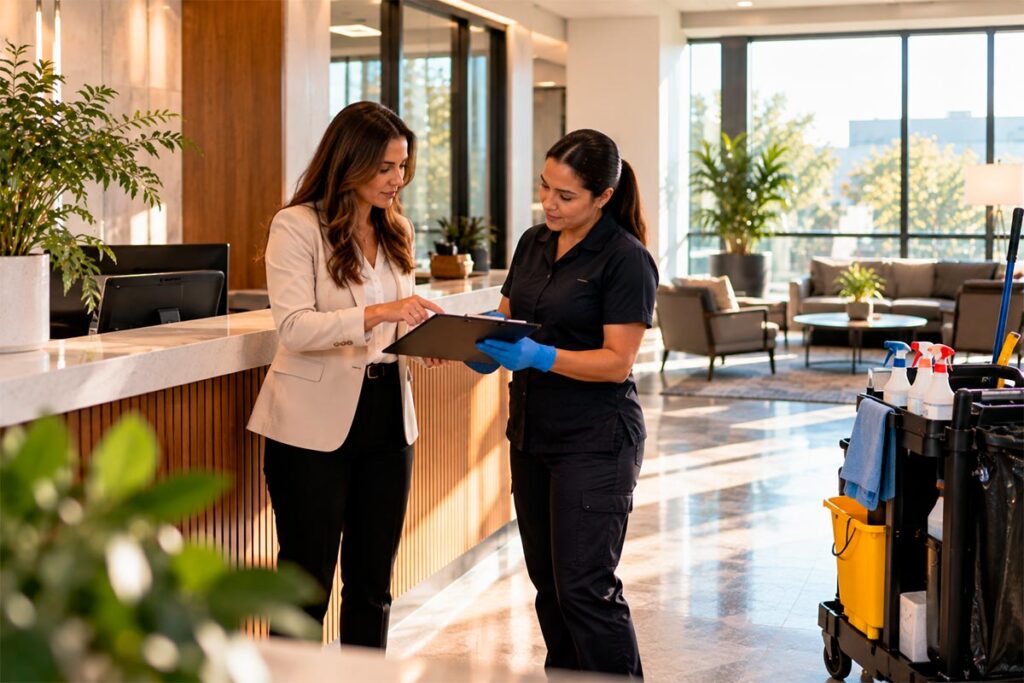

A small office can look presentable at the beginning of the week and feel noticeably different after several days of employees, client meetings and everyday activity. Dust accumulates on surfaces, floors show signs of foot traffic, shared areas need attention and restrooms require regular maintenance.
For small businesses, professional office cleaning should provide a practical routine for maintaining these spaces. The goal is not simply to make an office look clean after one visit. It is to establish a service that reflects how the business operates, which areas receive the most use and what needs attention between visits.
If you are comparing office cleaning services in Monmouth County, NJ, understanding the scope of a recurring service can help you ask better questions and choose a plan that fits your workplace.
Why a defined cleaning routine matters for small offices
Small offices often combine several functions within a limited space. The same property may include workstations, a reception area, a meeting room, a kitchenette and shared restrooms. Each area has different cleaning requirements, and usage can change throughout the week.
Without a defined routine, some areas may receive attention while others are overlooked. Business owners or employees may then find themselves handling cleaning tasks that compete with their regular responsibilities.
A recurring office cleaning service creates a more structured approach. Rather than waiting until dirt and everyday buildup become noticeable, the cleaning plan establishes priorities for maintaining frequently used areas.
The right arrangement depends on the property, the activity inside it and the scope agreed upon with the cleaning company. Not every small business needs the same checklist.
What should a recurring office cleaning service include?
A well-planned office cleaning routine should cover the areas that have the greatest impact on the daily use and presentation of the workplace. The exact tasks depend on the layout, the number of people using the space and the cleaning requirements discussed before service begins.
Reception areas and entrances
Reception areas are often the first part of an office that visitors see. Floors, accessible surfaces and entrance areas can accumulate dust and everyday dirt through regular foot traffic.
A recurring checklist may include cleaning accessible surfaces, removing visible debris and maintaining floors according to the agreed service. Businesses with customer-facing spaces may want to make these areas a priority.
Desks, workstations and shared surfaces
Workstations and shared surfaces can collect dust and everyday residue during normal use. A cleaning plan should clarify which accessible surfaces are included and how employees should prepare their desks before a visit.
Personal belongings, confidential paperwork, computer equipment and other sensitive items need particular consideration. A professional cleaning arrangement should establish clear expectations rather than assuming every item on a desk can be moved or cleaned.
Meeting rooms and common areas
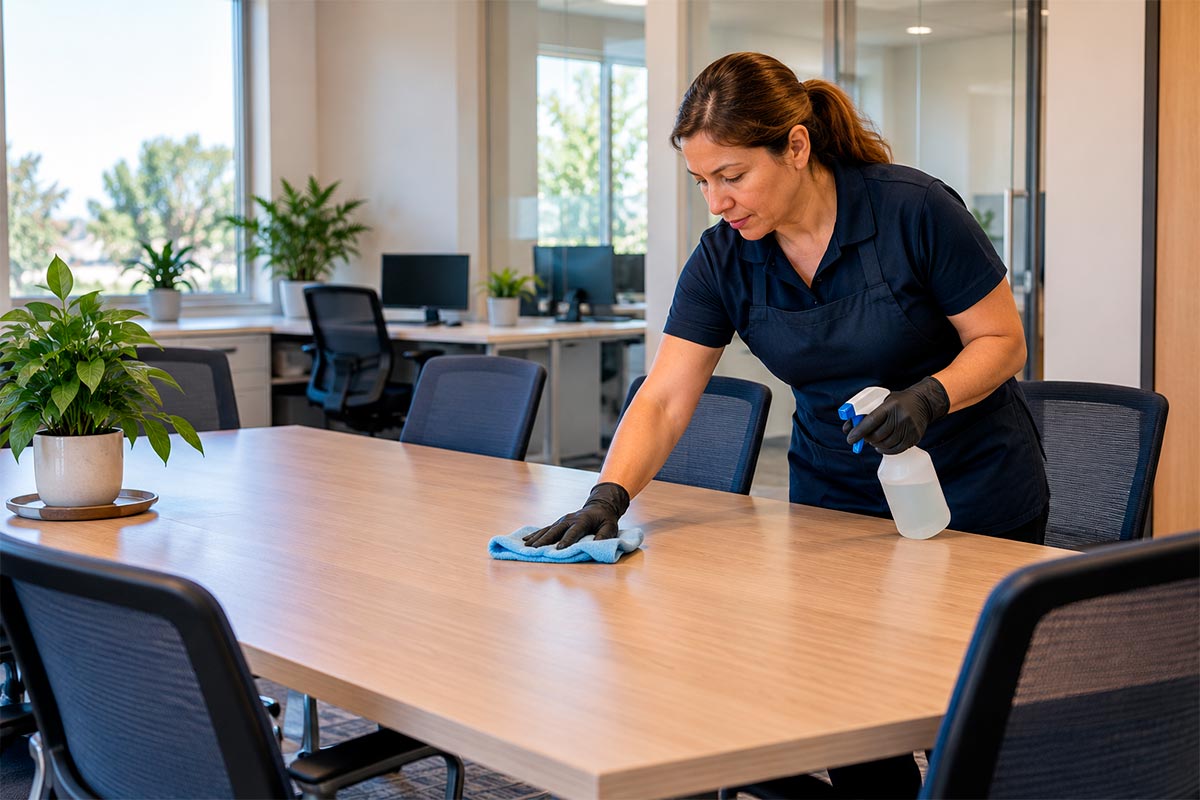
Meeting rooms, shared tables, break areas and other common spaces can be used by different people throughout the day. Regular attention to accessible surfaces, floors and visible debris helps maintain these areas between meetings and other activities.
If a business hosts clients or conducts frequent team meetings, those shared spaces may need to be included consistently in the cleaning checklist.
Kitchenettes and breakrooms
Small office kitchens can accumulate crumbs, spills and everyday residue around counters, sinks, tables and floors. The cleaning scope should identify which surfaces and appliances are included, rather than assuming every part of the kitchenette is covered.
Tasks such as cleaning accessible appliance exteriors, wiping counters and maintaining floors may be appropriate depending on the agreed scope. Cleaning inside refrigerators, handling dishes or organizing personal food items should be clarified separately.
Restrooms
Restrooms typically require regular maintenance because employees and visitors use them repeatedly. Depending on the agreed service, the checklist may cover toilets, sinks, faucets, mirrors, accessible surfaces and floors.
The business should also clarify whether consumable restocking, such as paper products and soap, is included or managed separately. The scope should reflect the actual use of the facility.
Floors, waste and frequently used areas
Floors, entrances, walkways and shared areas often show the effects of daily activity. The appropriate floor-care method depends on the surface type and the property’s needs.
Emptying designated waste bins, replacing liners when included, and maintaining accessible high-use surfaces can also form part of a recurring checklist. Any specialized flooring or additional waste-handling requirements should be discussed before the service is confirmed.
How to define a practical cleaning scope for your office

A useful office cleaning plan is specific enough to set expectations but practical enough to follow consistently. Before arranging service, consider how the workplace is used during a normal business week.
Identify the areas that need attention most often
Start with the entrance, work areas, meeting rooms, kitchenette, restrooms and floors. Consider which areas receive the most traffic and which ones affect the daily experience of employees or visitors.
A small professional office with limited visitors may have different priorities from a business that welcomes clients throughout the day. The checklist should reflect those differences.
Agree on what is included at each visit
A recurring service should have a defined scope. Clarify which rooms and surfaces are covered, which tasks are expected during each visit and whether any areas require special instructions.
This is particularly important for shared offices where employees may leave documents, personal belongings or equipment on desks. Clear expectations help avoid misunderstandings about what the cleaning team should handle.
Establish a schedule that fits your business
The service frequency should reflect how the space is used, not simply follow a standard schedule chosen without considering the business.
Employee numbers, visitor traffic, working hours and the amount of activity in shared areas can all affect maintenance needs. The cleaning arrangement should also be practical for the business’s operating hours and access requirements.
Set expectations for supplies, access and communication
Before the first visit, discuss the supplies and equipment arrangement, how the team will access the property, any security procedures and the best way to communicate changes or special requests.
Some businesses have building access rules, alarm procedures or rooms that should not be entered. These details should be clear from the start.
It is also useful to establish how additional tasks are requested and whether they require a separate arrangement or quote.
What to confirm before choosing office cleaning services
Comparing office cleaning companies involves more than comparing a price. Two quotes may describe different levels of work, visit schedules or responsibilities, making it difficult to judge them fairly without understanding the details.
Before choosing a provider, ask about the following:
- Service scope: Which rooms, surfaces and tasks are included in the recurring visit?
- Scheduling: What service times are available, and how are changes handled?
- Supplies and equipment: What does the cleaning team bring, and what does the business need to provide?
- Access and security: How will keys, entry codes, alarms and restricted areas be managed?
- Additional requests: How are deep cleaning needs, extra tasks or work outside the regular checklist handled?
- Communication: Who should the business contact if priorities change or an issue needs attention?
These questions help establish clear expectations before service begins. They also make it easier to compare office cleaning services based on what is actually included rather than on price alone.
If you are searching for office cleaning services near you, check that the provider serves your location and can discuss the specific requirements of your workplace before committing to a recurring arrangement.
How to assess whether an office cleaning service is working
A cleaning program should be reviewed against the priorities agreed upon at the beginning. Rather than relying only on whether the office looks clean immediately after a visit, consider how well the arrangement supports everyday use of the workplace.
Are the agreed areas receiving consistent attention? Are meeting rooms, restrooms and common spaces being maintained according to the checklist? Is the schedule suitable for the business? Can the person responsible for the property communicate a request or clarify an issue without unnecessary difficulty?
If the business changes its layout, adds employees or begins receiving more visitors, its cleaning needs may change too. A periodic conversation about scope and priorities can help keep the arrangement relevant.
The objective is a dependable routine that fits the actual workplace, rather than a checklist that no longer reflects how the business operates.
A practical checklist for planning office cleaning
Whether you are comparing office cleaning quotes or reviewing an existing arrangement, a few details can make expectations clearer from the start. Use this checklist to review responsibilities, scheduling, supplies and communication before agreeing on the scope of service.
A better service starts with clear expectations
Before choosing a recurring office cleaning plan, agree on the practical details that affect scheduling, access, responsibilities and communication.
| Planning priority | What to agree on | Why it matters |
|---|---|---|
| 01 Cleaning priorities | Identify the areas that matter most, any restricted rooms, special instructions and the tasks expected at each visit. |
A clear scope Everyone understands which work is expected and what falls outside the regular checklist. |
| 02 Schedule and access | Confirm suitable service times, entry instructions, alarm procedures, a point of contact and any building restrictions. |
Fewer interruptions The cleaning visit can be coordinated with business hours and property access requirements. |
| 03 Supplies and consumables | Establish who provides cleaning products and equipment, and whether items such as soap or paper products need restocking. |
Fewer assumptions Both parties know what is provided and which supplies or purchases are handled separately. |
| 04 Responsibilities and limits | Clarify how desks, documents, electronics, dishes, personal items and any sensitive areas should be handled. |
Better protection Employees know what to prepare, while the cleaning team has clear boundaries for the work. |
| 05 Communication and changes | Choose a contact person and decide how to report concerns, request extra tasks or approve work outside the usual scope. |
Smoother follow-up Questions and changing priorities can be addressed through a clear process. |
| 06 Service review | Decide how the business will review the checklist and communicate changes if staff numbers, hours or room usage shift. |
A plan that stays relevant The agreed service can be reviewed when the workplace or its needs change. |
Office cleaning services in Monmouth County, NJ
GiveMe5 Corp offers commercial cleaning services for offices, professional businesses, retail and small businesses, salons, spas, studios, showrooms and similar commercial spaces in Monmouth County, New Jersey.
For a small office, the most useful starting point is to identify the rooms that need regular attention, describe the level of activity in the space and clarify any scheduling or access requirements. That information helps determine whether the proposed service scope is appropriate.
Office cleaning is part of the company’s broader Commercial Cleaning offering. At this stage, the service is assessed according to each business’s needs rather than treated as a separate service with a one-size-fits-all checklist.
Let’s find the right cleaning plan for your workplace
Whether you are comparing service options or preparing to request a quote, start with the information that best matches your next step. GiveMe5 Corp serves businesses across Monmouth County, NJ.
Commercial cleaning for your business
Explore cleaning support for offices, professional businesses, retail spaces, salons, studios, showrooms and similar workplaces.
Explore the serviceGet to know GiveMe5
Learn about the company, its approach to cleaning and the values behind its work with homes and businesses.
About GiveMe5Discuss your office cleaning needs
Tell us about your workplace, the areas that need attention and any scheduling or access requirements so your needs can be discussed before the service scope is confirmed.
Start your quote requestFrequently asked questions about office cleaning services
Does every office cleaning quote cover the same tasks?
No. The scope can vary according to the property, its layout, the areas that need attention and the tasks agreed upon. Review the checklist or written service details before booking so you understand what is included and which requests may require a separate arrangement.
Should employees clear their desks before a cleaning visit?
Businesses should establish expectations for personal belongings, paperwork and electronic equipment before service begins. Clearing unnecessary items from the surfaces to be cleaned can make the agreed tasks easier to complete. Sensitive documents and personal items should be handled according to the business’s instructions.
Are cleaning supplies and restroom consumables included?
That depends on the agreed arrangement. Ask which cleaning supplies and equipment the provider brings and whether the business is expected to supply any products. Restocking items such as soap, paper towels and toilet paper should also be confirmed rather than assumed to be included.
Can recurring office cleaning be adapted to a small business?
Yes. The checklist should reflect the size and layout of the workplace, how the space is used and the tasks the business needs to prioritize. A small professional office may need a different scope from a retail space or a larger commercial property, so it is useful to discuss the requirements before requesting a quote.