

There is nothing quite like a summer day at the Jersey Shore. The beach, the breeze, the water, and a few hours with family can make the entire week feel better.
Then everyone gets home.
Suddenly, there is sand in the entryway, damp towels on a chair, beach bags on the floor, and a trail of tiny grains that somehow reaches rooms nobody visited.
For homeowners in Monmouth County, this is a familiar summer problem. The good news is that you do not have to spend the rest of the evening cleaning your entire house. A few simple habits can stop most of the mess before it spreads.
How to keep sand out of house Jersey Shore homes
The best way to deal with beach sand is to stop it at the door instead of chasing it around the house afterward.
Create a simple transition area near the entrance. Encourage everyone to remove sandy footwear before coming inside, shake towels and blankets outdoors, and keep wet beach items together instead of carrying them from room to room.
A quality outdoor mat followed by a washable indoor mat can also capture a surprising amount of debris.
The key is consistency. When everyone follows the same routine after every beach trip, the amount of sand reaching your living areas drops dramatically.
Coastal entryway cleaning tips for busy summer households
The entryway receives more abuse during beach season than almost any other part of the home.
Fine sand can settle beneath mats, along baseboards, around furniture legs, and inside corners that are easy to overlook. Once people continue walking through the house, those particles spread into other rooms.
Vacuum the entry area regularly rather than waiting until the floor looks dirty. Pay particular attention to the edges of mats and the path between the exterior door and the first main living area.
A basket for beach towels, sunscreen, goggles and other accessories can also prevent wet and sandy items from ending up on floors or furniture.
Cleaning sand from hardwood floors in New Jersey homes
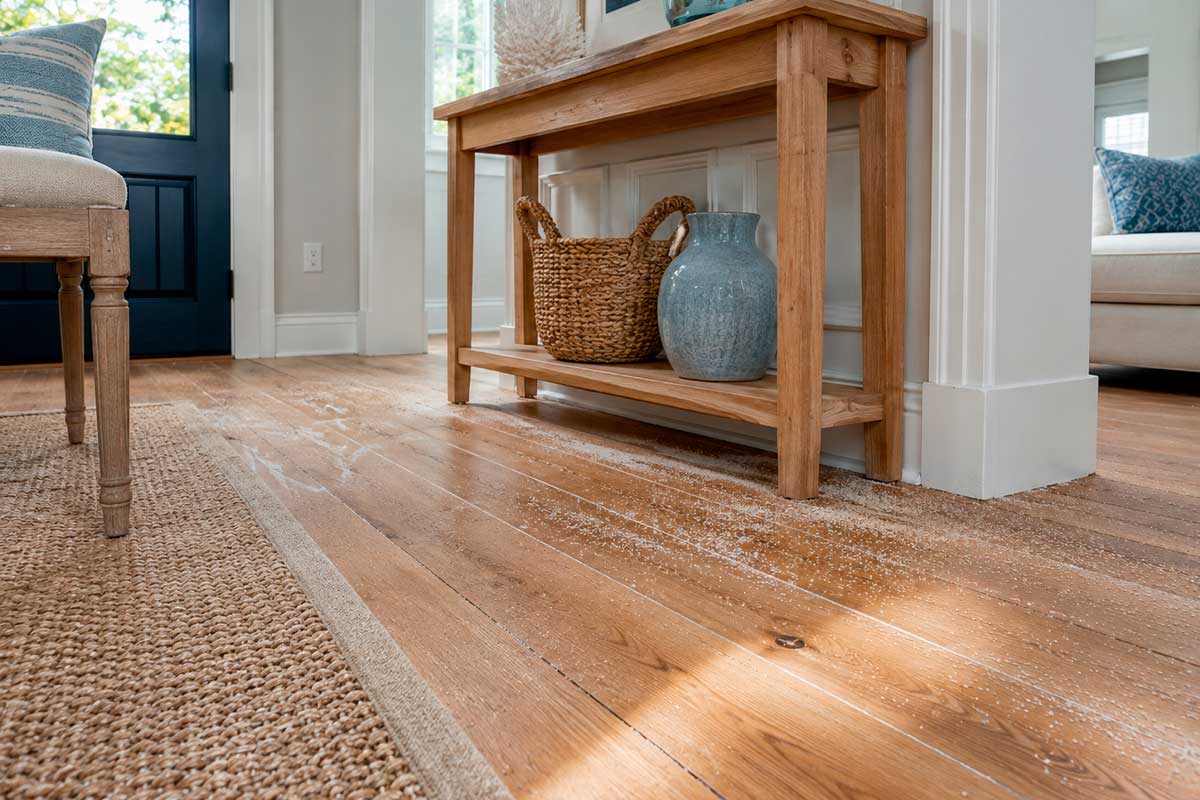
Hardwood requires a slightly different approach because loose sand can collect in seams and along the edges of boards.
Start by removing dry particles before using any liquid cleaner. A vacuum designed for hard flooring is generally more effective than pushing fine grit around with a traditional broom.
Focus on areas where people remove shoes, near entry doors, underneath furniture, and along baseboards.
Once the loose material is gone, use a cleaning method recommended for your particular flooring. Avoid excessive water on wood surfaces. More moisture is not better cleaning, and too much water can create a separate flooring problem.
Salt residue floor cleaning: why the film keeps coming back
Sand gets most of the attention, but salt residue can create another problem after a day at the beach.
Water from wet swimsuits, towels, footwear and beach equipment can dry on floors and leave behind a faint film. You may notice it as a dull appearance, a slightly sticky surface, or a different feeling under bare feet.
The correct cleaning method depends on the flooring material. Hardwood, luxury vinyl, tile and natural stone should not automatically be treated with the same product or technique.
The goal is to remove the residue without damaging the finish. Following the flooring manufacturer’s care instructions is always the safest starting point.
Post-beach home cleanup in Monmouth County: focus on the high-traffic zones
You do not need to clean every room immediately after returning from the beach.
Start with the areas most likely to receive sand and moisture: the entrance, hallways, bathrooms, laundry area, kitchen and the room where everyone tends to relax after coming home.
Move wet towels and swimsuits to an appropriate drying or laundry area first. Then remove loose debris from floors and rugs. After that, clean visible residue from hard surfaces.
This order prevents people from tracking moisture and sand back across areas you have already cleaned.
What to do with wet towels and swimsuits when you get home

Damp beach items should not sit in a closed bag for hours.
Open beach bags as soon as you get home and remove towels, swimsuits and other wet materials. Hang what can be dried and move clothing that needs washing into the laundry routine.
This is especially important in a humid summer environment. According to the U.S. Environmental Protection Agency, indoor relative humidity should be kept below 60%, ideally between 30% and 50%, when possible.
Keeping wet items from sitting around the house is a simple way to reduce unnecessary moisture indoors.
Why beach sand keeps appearing days later
One of the most frustrating parts of summer cleaning is finding sand several days after the beach trip.
Usually, the original cleaning was not completely ineffective. The problem is that fine particles can remain inside rugs, upholstery, under furniture, around baseboards and beneath objects that are moved infrequently.
Walking over those areas can gradually release the particles again.
For that reason, an effective cleanup should not only cover the center of the floor. It should follow the way the house is actually used and include the places where sand naturally collects.
When a deeper cleaning makes more sense
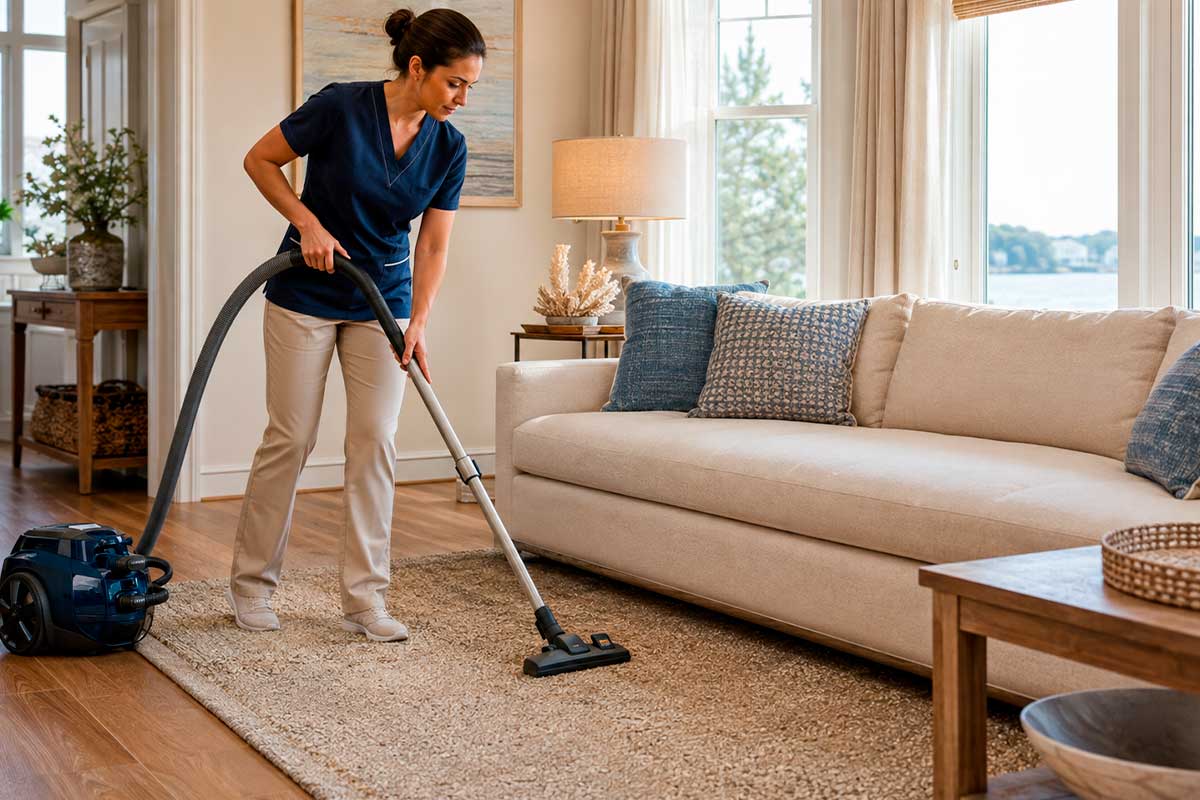
There is a point when beach cleanup stops being a quick household task and becomes part of a larger cleaning problem.
If sand, dust and everyday buildup have accumulated for weeks, a basic vacuuming session may only make the home look cleaner temporarily.
A professional deep cleaning can be useful when neglected corners, detailed floor areas, baseboards, surfaces and other hard-to-reach spaces need more attention than a normal weekly routine allows.
For busy households in Monmouth County, that can be especially valuable during the summer, when weekends are better spent at the Shore than catching up on housework.
A simple beach-day cleaning routine for Monmouth County homes
The most effective routine is the one your household can repeat every time.
| Home zone | Key cleaning tasks | Why it matters |
|---|---|---|
|
🚪
Entryway
|
Vacuum mats, remove visible sand, clean corners and check the threshold for moisture and salt residue. | Prevents beach debris from being carried deeper into the home by everyday foot traffic. |
|
🪵
Hard floors
|
Remove dry sand first, then use the appropriate cleaning method for hardwood, tile or luxury vinyl. | Reduces grit, protects flooring finishes and helps prevent residue from building up over time. |
|
🛋️
Rugs & upholstery
|
Vacuum slowly along rug edges, beneath cushions and around the areas where beach bags or towels are placed. | Captures fine particles that can remain hidden and later fall back onto otherwise clean floors. |
|
🧺
Wet beach items
|
Remove towels and swimsuits from closed bags and place damp items somewhere they can dry properly. | Limits lingering moisture and prevents wet beach gear from creating additional household mess. |
A good beach-day cleaning routine is not about using more products or spending hours cleaning. It is about controlling the mess at the right moments.
When sand and moisture are stopped near the entrance, there is much less to deal with later. And when the home has already accumulated more buildup than a normal routine can handle, professional help can take care of the work without turning another summer weekend into a cleaning project.
Move-in & move-out cleaning
A detailed cleaning solution for homeowners, landlords and families preparing for their next move across Monmouth County.
Explore detailed cleaningRequest a free cleaning quote
Get a customized estimate for residential or commercial cleaning services in Monmouth County.
Get a quote todayPre-event cleaning in Monmouth County
Get your home or property ready before guests arrive, especially during busy summer weekends and Shore season.
Explore pre-event cleaningFrequently asked questions about cleaning after a Jersey Shore beach day
Should I rinse sandy beach gear before bringing it home?
When practical, removing loose sand outdoors before the items enter the house is helpful. Rinsing is not always necessary, especially for items that need to remain dry. The important step is preventing loose sand from being carried directly onto indoor surfaces.
Can sunscreen create a cleaning problem inside the house?
Yes. Sunscreen can transfer from skin onto upholstery, bedding, towels, door handles and other frequently touched surfaces. Keeping beach towels and clothing contained after returning home can reduce unnecessary transfer and make routine cleaning easier.
Why does the bathroom often become one of the dirtiest rooms after a beach trip?
Several beach-day activities converge there. People change clothes, shower, rinse belongings and leave wet towels in the same area. That combination introduces moisture, sand and product residue, making the bathroom a high-priority area after a busy beach day.
Are reusable beach bags worth cleaning regularly?
Absolutely. Beach bags can accumulate sand, sunscreen residue, moisture and small debris over repeated trips. Emptying them after each outing and cleaning them according to the manufacturer’s instructions helps prevent the same material from being carried back into the house the following weekend.
When should a homeowner consider recurring professional cleaning during beach season?
Recurring service can make sense when summer schedules leave little time for household maintenance or when the home experiences frequent visitors, children, pets or repeated beach traffic. The objective is not only to clean after individual beach days, but to prevent buildup from accumulating throughout the season.