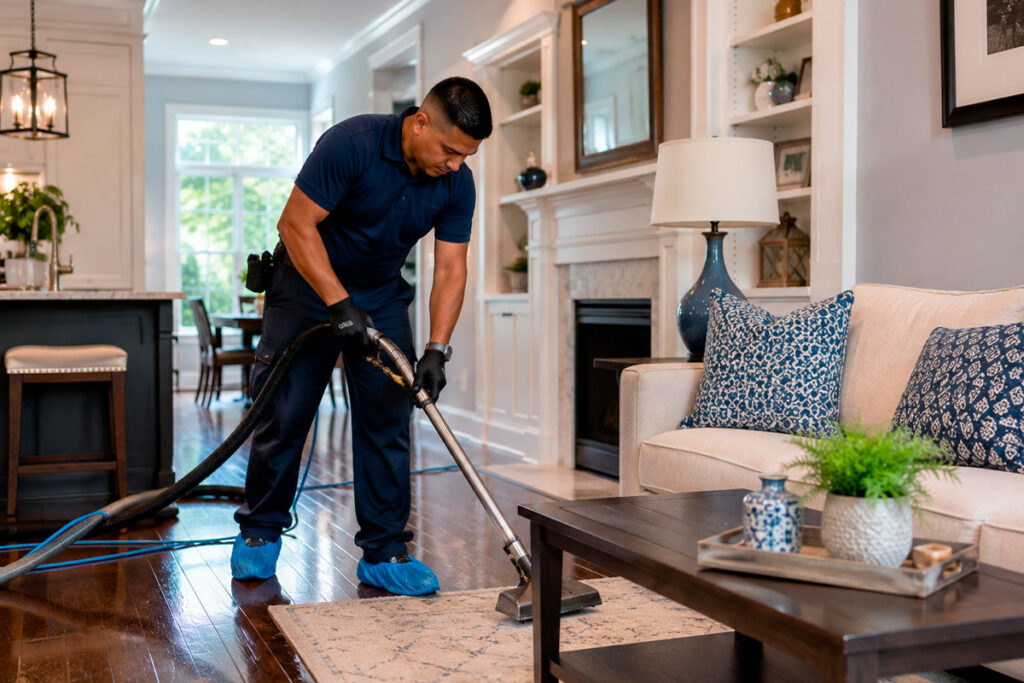

The right cleaning frequency depends less on a universal schedule and more on how your home is used, how quickly it becomes difficult to maintain and how much time your household realistically has available.
Some homes benefit from weekly service, while others may be perfectly manageable with biweekly or monthly visits. The important thing is choosing a routine that matches your household instead of paying for a frequency that does not fit your needs.
For families in Monmouth County, that decision can change throughout the year as school, work, pets, guests and seasonal activities affect how the home is used.
There is no single cleaning schedule that works for every home
A two-person household with relatively low activity may have very different cleaning needs from a larger family with children, pets and a full calendar.
The same home can also require a different level of support at different times. A quieter period may make monthly service practical, while a demanding school or work schedule may make more frequent cleaning worthwhile.
That is why deciding how often to hire a house cleaner starts with looking at the household itself.
Start with how quickly the home falls behind
Think about what happens when regular cleaning is postponed.
Do bathrooms become difficult to keep up with? Does dust become noticeable within a few days? Are floors and kitchen surfaces constantly competing for attention? Or can your household comfortably maintain those areas for several weeks?
The point is not to measure cleanliness perfectly. It is to identify how quickly normal household activity creates enough work that cleaning becomes difficult to manage.
Consider who lives in the home
The number of people using a home naturally affects its maintenance needs.
Children can increase laundry, clutter and activity in shared spaces. Pets can add hair and dander to floors and furniture. Adults working from home may spend significantly more time in the same rooms during the week.
These factors do not automatically determine a cleaning frequency, but they can help explain why one household needs more regular support than another.
Look at your actual schedule
Available time is another important part of the decision.
A household may technically be capable of cleaning everything itself but still find that the work repeatedly gets postponed because weekday schedules are demanding. When that happens, weekends can gradually become the time reserved for catching up on housework.
A useful cleaning routine should fit the life you actually live, not the amount of free time you wish you had.
Weekly, biweekly or monthly cleaning: what is the difference?

Once you understand how quickly your home falls behind, the next question is frequency. Weekly, biweekly and monthly cleaning can all make sense, but they serve different household situations.
The goal is not to choose the most frequent option. It is to choose a schedule that provides enough maintenance for your home without creating unnecessary service.
Weekly house cleaning
Weekly cleaning can be a good fit for households where the home is used heavily throughout the week.
Families with children, multiple pets, frequent cooking or high activity in shared spaces may notice that bathrooms, floors, kitchens and other commonly used areas need attention before another full week has passed.
A weekly house cleaning routine can help maintain a more consistent baseline when household activity generates a steady amount of work.
Biweekly house cleaning
Biweekly service can work well when the home remains reasonably manageable between visits but still benefits from professional maintenance on a regular basis.
For some households, two weeks provides enough time for everyday upkeep without allowing dust, bathroom buildup or floor maintenance to become a major weekend project.
This option can also be practical for families that handle lighter cleaning tasks themselves but prefer professional support for the more demanding work.
Monthly house cleaning
Monthly service may suit households with lower cleaning demands or homeowners who are comfortable handling regular maintenance themselves.
A monthly visit can provide additional professional attention without requiring frequent appointments. However, it may be less appropriate when a home accumulates noticeable dust, pet hair, bathroom buildup or everyday mess within a shorter period.
The best frequency depends on the gap between visits
The important question is what your home looks and feels like before the next cleaning.
If the household is consistently struggling during the final days before a visit, the frequency may not be sufficient. If the home remains comfortable and manageable throughout the interval, a less frequent schedule may provide the right balance.
That is why recurring cleaning frequency should be based on the home’s actual needs, not simply on what another household chooses.
When should you choose a more frequent cleaning schedule?

Frequency becomes more important when the home consistently reaches the same point of buildup before the next scheduled visit. Rather than changing the schedule because a particular cleaning frequency is popular, look at what your household needs between visits.
Weekly may make sense when the home has a high level of activity
A weekly service can be useful when several people share the home, pets are present, meals are prepared frequently or the household spends most of its time at home.
In these situations, regular attention can help keep common areas, bathrooms, floors and kitchens from accumulating enough everyday mess that cleaning becomes a major project.
Biweekly can provide a practical middle ground
For many households, two-week intervals offer a balance between professional maintenance and light household upkeep between visits.
The family can handle smaller everyday tasks while the cleaning service provides a more thorough maintenance point on a predictable basis. This can work particularly well when the home is not heavily used but still becomes noticeably harder to maintain after a couple of weeks.
Monthly service may require more independent upkeep
A monthly schedule can be appropriate when household activity is relatively low and residents are comfortable maintaining the home between professional visits.
However, the longer interval means more responsibility falls on the household. If bathrooms, floors, dust or other frequently used areas regularly become difficult to manage before the next appointment, monthly cleaning may leave too much time between visits.
Your household should determine the frequency
A useful way to evaluate the schedule is to notice when cleaning stops feeling manageable.
If the home remains comfortable throughout the interval, the frequency may be appropriate. If everyone is rushing to clean before the next visit, or the house repeatedly reaches the same buildup point well before service, it may be worth considering a more frequent routine.
The best schedule is ultimately the one that keeps the home at a comfortable maintenance level without creating unnecessary work between professional visits.
How to find the right cleaning frequency for your home
Choosing between weekly, biweekly and monthly service becomes easier when you stop looking for a universal answer and instead evaluate the specific demands of your household.
The most useful approach is to consider how quickly different areas become difficult to maintain, how much upkeep your household can handle between visits and whether your current routine leaves you feeling comfortably in control.
Consider the home’s size and layout
A larger home does not automatically require more frequent professional cleaning, but it can increase the amount of time needed for regular maintenance.
Multiple bathrooms, several bedrooms, open living areas and spaces that receive frequent use can make it harder to keep everything consistently maintained. The layout also matters because some homes concentrate activity in a few high-use areas while others have more evenly distributed daily use.
Think about pets, children and daily activity
Household composition can change how quickly cleaning needs build up.
Children, pets, frequent cooking, entertaining and spending more time at home can all increase the amount of routine maintenance required. These factors are especially useful when deciding whether a weekly or biweekly house cleaning schedule is more practical.
A quieter household may be able to maintain a comfortable level of cleanliness for longer between professional visits.
Consider what you want professional cleaning to accomplish
The right frequency also depends on what you expect from the service.
Some homeowners want professional cleaning to handle most of their regular maintenance. Others prefer to take care of everyday tasks themselves and use professional visits to cover the more time-consuming work.
That distinction can make a significant difference when deciding between weekly, biweekly or monthly house cleaning service.
Know when a reset is needed first
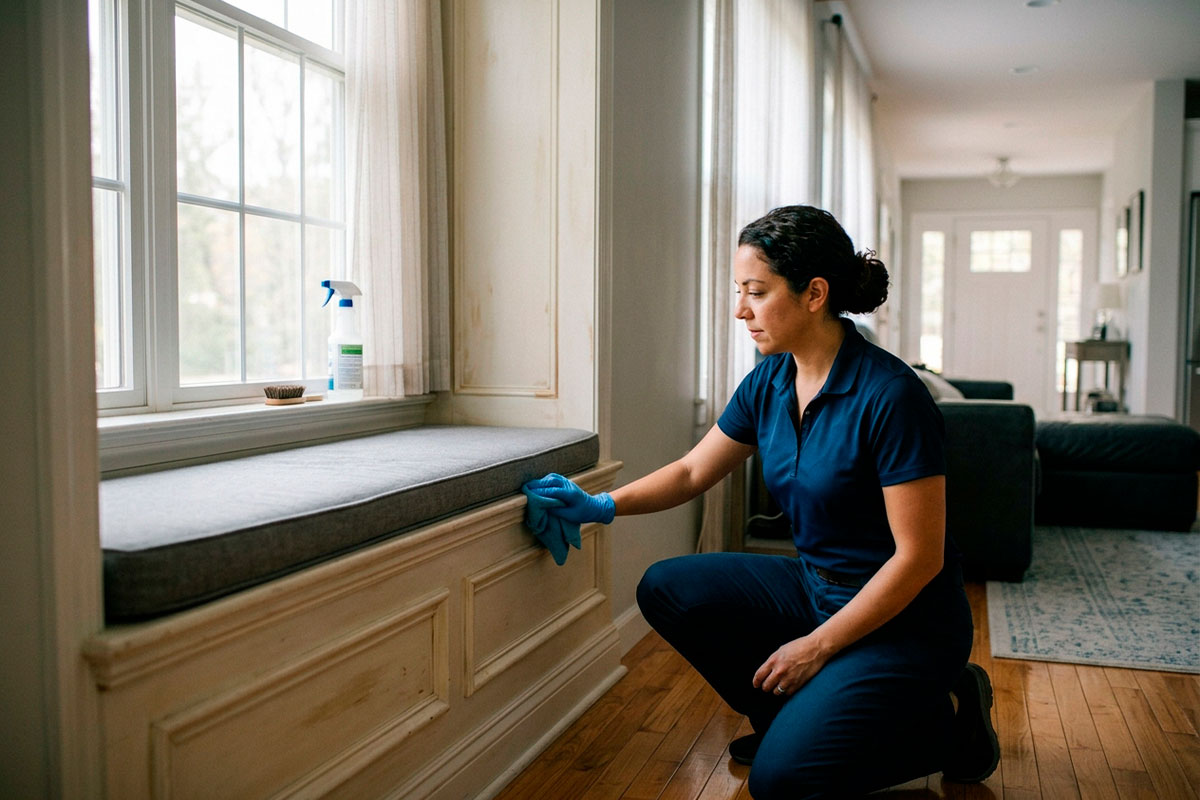
Sometimes the question is not how often to schedule recurring visits, but whether the home needs a more thorough starting point.
If buildup has accumulated over time, beginning with Deep Cleaning can establish a better baseline. Recurring service can then help maintain that level of cleanliness instead of repeatedly trying to catch up.
This creates a simple progression: reset when necessary, then choose a recurring frequency that matches the home’s ongoing needs.
Choosing a cleaning schedule that fits your household
There is no advantage in choosing a cleaning frequency simply because it is more common. The right schedule is the one that keeps your home manageable between visits and fits your household’s budget, time and daily activity.
For some Monmouth County homes, that may mean weekly service. Others may find that biweekly or monthly cleaning provides the right level of support.
A simple framework for comparing frequencies
A practical way to compare cleaning frequencies
The right schedule depends on how quickly your home needs attention and how much maintenance your household can handle between visits.
| Frequency | May fit homes with | What to consider |
|---|---|---|
|
Weekly cleaning
Higher activity
|
Children, pets, frequent cooking or heavy use of shared living spaces. | A strong option when the home becomes noticeably harder to maintain within a week. |
|
Biweekly cleaning
Balanced maintenance
|
Moderate activity and households that can handle lighter upkeep between visits. | Can provide a practical balance between professional maintenance and household cleaning. |
|
Monthly cleaning
Lower activity
|
Lower household activity or residents comfortable managing most routine cleaning themselves. | More independent upkeep is usually needed between professional visits. |
|
Deep + recurring
Reset + maintenance
|
Existing buildup that needs more detailed attention before regular maintenance. | A deeper starting point can create a cleaner baseline for ongoing service. |
Frequently asked questions
Is weekly house cleaning better than biweekly cleaning?
Not necessarily. Weekly service may be more appropriate for homes with heavier activity, while biweekly cleaning can work well when the household can handle lighter maintenance between visits.
How do I know if monthly house cleaning is enough?
Look at what happens during the weeks between visits. If the home remains manageable with your own routine, monthly service may be sufficient. If frequently used areas become difficult to maintain well before the next appointment, a shorter interval may be more practical.
Should I start with deep cleaning before recurring service?
A deep cleaning can be useful when a home has accumulated buildup or has not received detailed attention for some time. Starting from a cleaner baseline can make recurring maintenance more effective.
Does having pets mean I need weekly cleaning?
Not automatically. Pets can increase hair, dander and everyday cleaning demands, but the appropriate frequency still depends on the number of pets, household activity, flooring, furniture and how much maintenance the household can handle itself.
Can my cleaning frequency change later?
Yes. A cleaning schedule should respond to changes in how your household uses the home. School schedules, new work demands, pets, guests or other lifestyle changes can all affect how much professional support is useful.
The best cleaning frequency is the one that fits real life
Choosing a house cleaning schedule is ultimately about finding the right balance between the condition of your home and the time you have available to maintain it.
Weekly, biweekly and monthly service can all be appropriate. What matters is whether the frequency keeps the home at a comfortable level of maintenance without leaving your household constantly playing catch-up.
Make your cleaning routine easier to manage
GiveMe5 provides professional cleaning options for Monmouth County households looking for a more predictable way to maintain their homes.
Find the cleaning frequency that fits your home
Tell us about your household, schedule and cleaning needs, and we’ll help you determine a practical starting point.
Get your free quote →